






Why Browser-Based Games Continue to Grow in 2026
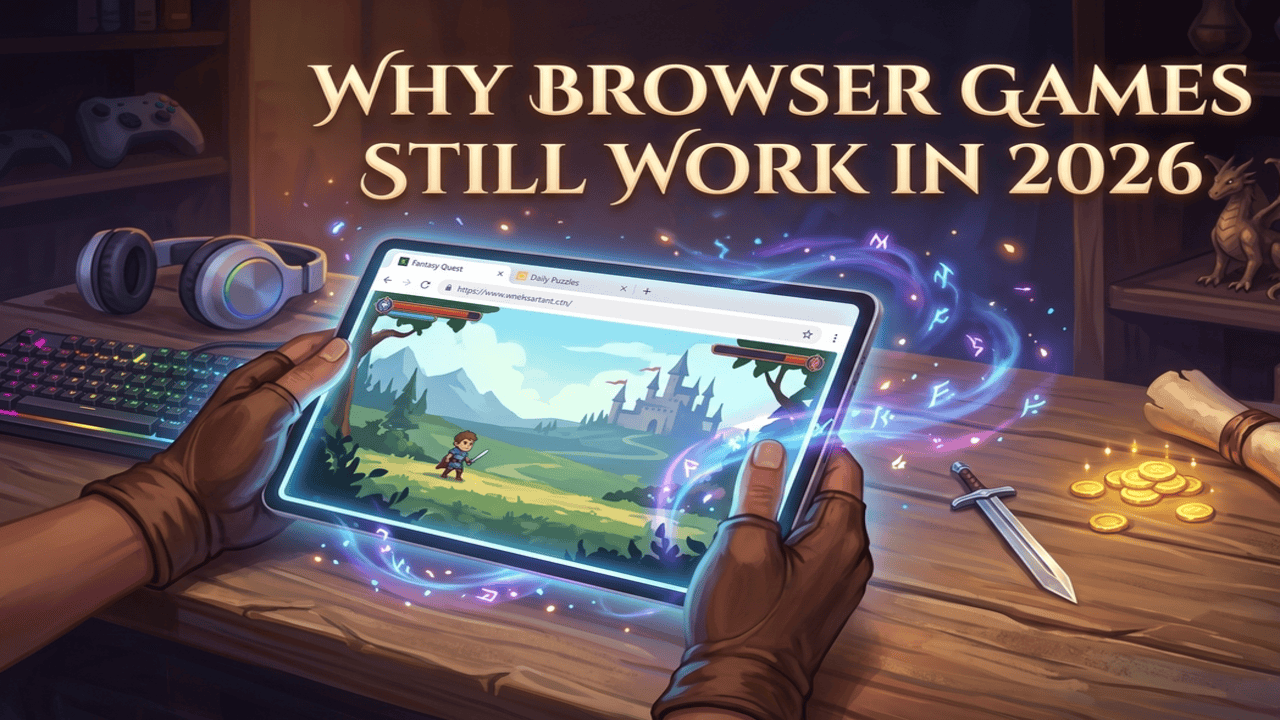
There was a time when “browser game” meant a tiny window, basic graphics, and probably a Flash loading bar. That whole setup is badly out of date.
Open a browser in 2026 and there is far more to play than a few basic web games. Puzzles, shooters, strategy titles, multiplayer games, casino-style releases, even cloud gaming. All without a big install first.
For a lot of players, that is the appeal. Find something, give it a go, then close the tab when you have had enough.
No Download Is Still a Big Deal
Games keep getting larger. Phones fill up. Laptop storage disappears faster than expected. Nobody enjoys deleting three apps just to make room for something they might play twice.
A browser game avoids that little argument with your device. You open a page and get started. Exeleon’s Fireboy and Watergirl browser guide is a good example of an older idea that still works: simple access, familiar controls, and no big installation sitting between the player and the game.
If someone has ten minutes before a meeting or half an hour on the couch, a long setup feels unnecessary.
Phones Changed the Picture
Browser gaming is no longer mainly a desktop thing. In July 2026, StatCounter put mobile devices at just over half of worldwide web use, ahead of desktop. The current global device split helps explain why developers pay so much attention to small screens.
Touch controls are better too. Buttons are larger, menus are cleaner, and many games resize themselves without much fuss. Exeleon has also covered mobile browser slot games, where tapping a screen makes more sense than trying to recreate a mouse-and-keyboard setup.
A browser also makes it easier to move between devices without treating each one as a separate gaming machine.
Web Games Do More Than They Used To
The technology underneath the page has moved on. WebGPU, for example, gives developers access to a device’s graphics hardware for more demanding visuals and calculations. Mozilla’s guide to what WebGPU can do shows how far browser graphics have moved beyond the old plug-in days.
Progressive Web Apps have blurred things further. Some web games can behave more like installed apps, with shortcuts and other app-style features. Google’s guide to how Progressive Web Apps work even points to cloud gaming services delivered through the browser.
None of this means every browser title needs console-level graphics. Sometimes a clean card game or quick puzzle is enough.
Short Games Fit Around Everything Else
Not every gaming session needs to become an evening. That is another reason the browser still has a place.
Players might open:
- A puzzle while waiting for a train.
- A sports game during a lunch break.
- A multiplayer match with a friend.
- A quick strategy game between jobs.
- A few free penny slot machine games when they want something casual.
There is little to think about when getting started, and just as little around stopping.
Think about a normal evening online. A few messages, a video, maybe some news, then a game for ten minutes. It does not need its own launcher, update screen, or hour-long commitment.
There Is Room for Small Games
The biggest games get all the headlines, but not everyone wants to disappear into a 70-hour story every time they play.
A browser gives smaller games somewhere to live. Developers can build around one idea rather than stuffing a download with extra modes. The result can be rough around the edges, but that can be part of the charm. One clever mechanic is sometimes enough.
There is also less commitment for the player. Try it. Hate it? Close the tab. Like it? Bookmark it and come back tomorrow. That is easier than downloading 40GB and hoping for the best.
The Browser Never Really Left
Web technology has moved on quickly, with smartphones helping to speed things up even further. Titles load faster, visuals are sharper, and players can jump in across a much wider range of screens.
The main appeal is still pretty simple. No huge download, no long setup, and very little standing between you and a new game.
Sometimes you just want something that is fun for a bit. Ten or fifteen minutes can be plenty. Close the game, get on with your day, and maybe come back to it later.