






How to Build Trust and Authenticity in Online Gaming Communities
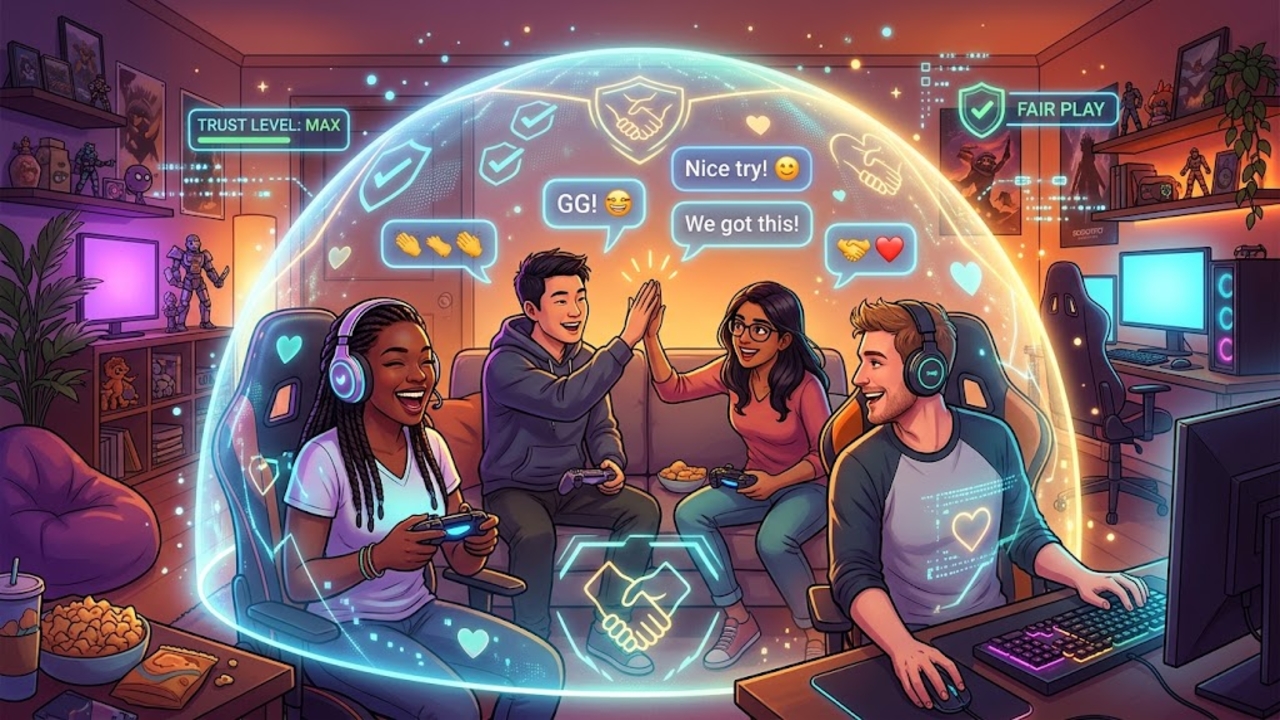
Online gaming communities are about more than winning matches or completing difficult quests. For many players, they are a place to connect with others, share experiences, and belong to a group that welcomes them. Across multiplayer games, matchmaking platforms, gaming forums, and Discord servers, trust plays a pivotal role in shaping how players experience online gaming communities.
Building trust online is not easy. Players can run into fake profiles, toxic behavior, false information, cheating, and impersonation. Experiences like these make it hard for community members to feel at ease around strangers.
Fortunately, there are steps online gaming communities can take to create a more authentic experience and build safer environments for everyone. From setting ground rules to encouraging open communication, small changes can make a big difference in how players interact with each other.
Why Trust Matters in Online Gaming Communities
Trust gives players a sense of comfort when they are part of a community. When people believe others will treat them fairly, respect their boundaries, and communicate honestly, they are more willing to contribute, cooperate, and form genuine friendships.
Imagine a group of players looking for teammates in a competitive multiplayer game. The group becomes more reliable when members show up on time, share strategies, and stay respectful after a loss. Nobody has to worry that another player will ruin the experience.
Trust also affects community growth. Online gaming communities with helpful players, clear expectations, and transparent leadership are more likely to keep new members engaged. On the other hand, communities that tolerate harassment, deception, or cheating often find themselves losing members.
Authenticity matters too. Players need to feel free to show their personalities, share their interests, and admit their mistakes without having to put on a perfect face online. A community grows weaker when members feel they must play a role just to be liked.
1. Establish Clear Rules and Expectations
Every gaming community needs guidelines that define acceptable behavior. Without a clear consensus, disagreements can escalate into personal attacks, and moderators may struggle to enforce rules evenly.
Community guidelines should explain how members are expected to communicate, what behavior is not allowed, and what happens when someone breaks the rules. For example, a gaming server might prohibit hate speech, targeted harassment, cheating, and sharing another player’s private information.
Rules should also be easy to find and easy to understand. A long document full of technical jargon is unlikely to help new members understand what is expected of them. Instead, communities can share a quick overview when someone joins and link to more detailed guidelines for anyone who wants them.
2. Make Moderation Fair and Consistent
Rules only work when they are enforced fairly. If one member receives a warning for insulting another player while someone else does the same thing without consequence, members will start to question whether the community is truly welcoming.
Moderators should document key decisions and explain them when appropriate, offer a clear way to report concerns, and avoid letting personal relationships influence enforcement. They should also be able to tell the difference between an honest disagreement and intentional harassment.
For example, two players might argue about the best strategy for a particularly difficult level. That disagreement does not always need to be resolved. However, if one player starts repeatedly insulting the other or encourages others to pile on, moderators should step in.
Consistent moderation shows that community standards apply to everyone. Over time, this helps members feel safer and encourages them to take responsibility for their own behavior.
3. Encourage Honest Communication and Respectful Behavior
Trust is built over time, not through a single statement of community values. How players respond to mistakes, disagreements, and unfamiliar opinions can determine whether others feel comfortable around them.
Creating a respectful environment does not mean removing competition or humor. Gamers can still compete, joke around, and debate game mechanics. What matters is that they respect each other’s boundaries and keep disagreements from becoming personal.
Players can contribute by owning their mistakes, offering helpful feedback, and communicating clearly during matches. When a poor decision costs the team a win, explaining how to improve is far more useful than placing blame.
Community leaders can also set the tone by modeling the behavior they want to see. When leaders welcome new players, explain the rules, and stay respectful toward opponents after a loss, they show newcomers that participation does not require elite skill or an intimidating personality
4. Create Opportunities for New Members
New members sometimes hesitate to join in because established members already seem so active. Simple introductions, beginner-friendly events, and a dedicated space for questions can make getting involved feel far less daunting.
For instance, a multiplayer community might host weekly “new player welcome” sessions where experienced members share tips about maps, gear, or teamwork. These sessions give beginners a chance to interact without feeling pressure to prove their worth right away.
The goal is to give people room to contribute at different levels. When members feel valued for their enthusiasm and willingness to participate, not just their skill, they have more reasons to stay.
5. Promote Authenticity in Digital Interactions
Online profiles let players share their interests, personalities, and preferences. However, they also create opportunities for misrepresentation. Some people exaggerate their experience, use someone else’s photos, or pretend to share interests just to get attention.
Online gaming communities cannot verify everything about every member, and they should not require everyone to prove their real identity. Players should be able to use a nickname or an anonymous profile without automatically being treated with suspicion.
Instead, communities should focus on behavior and transparency. Credibility comes from communicating clearly, respecting other people’s privacy, and being honest about your intentions. A player who admits to being new to a game is more valuable to a team than one who pretends to know everything and refuses to cooperate.
Community platforms can support authenticity by offering optional verification, clear reporting tools, and settings that let users control who can contact them. These measures make suspicious activity easier to spot without forcing members to reveal personal information they would rather keep private.
6. Recognize Misleading and Artificial Content
AI-generated images, automated messages, and fake reviews are common issues in today’s gaming world. These tools can be useful, but they can also be used to deceive people, spread misinformation, or create false impressions.
An AI detector can help moderators, gaming content creators, and community managers analyze text and identify content that may have been generated by artificial intelligence. This can be particularly useful when reviewing user submissions, evaluating community contributions, or maintaining consistent content standards across gaming platforms. By incorporating AI detection into their workflows, community managers can make more informed decisions about the content shared with their audiences.
The best approach combines available tools with context and human judgment. Moderators can review a user’s account history, ask follow-up questions, and check which community rules apply. They should never treat a single automated result as proof of misconduct.
The same applies to images, videos, and other profile media. Suspected impersonation can be investigated using reverse image search, platform reporting systems, or by verifying information through trusted sources. The goal is not to assume that every account or piece of AI-generated content is fraudulent, but to identify specific risks.
7. Use Technology to Support Community Management
As online gaming communities grow, keeping them welcoming becomes harder. Moderators juggle multiple channels, organize events, answer the same questions repeatedly, track reports, and still try to stay involved in the games themselves.
Used thoughtfully, technology can make these tasks easier. Automated moderation tools can flag potentially abusive messages, catch repetitive spam, and help enforce basic rules. Shared documents help moderators follow up on unresolved issues, and scheduling tools make it easier to coordinate tournaments and community events.
AI tools can also help with content creation. Community managers can use them to draft event announcements, plan discussions, create beginner guides, or summarize member feedback. However, someone on the community team should always review the output to make sure it is accurate and strikes the right tone.
For teams juggling many responsibilities, the best all-in-one AI tools can bring writing support, research, brainstorming, and content organization into one place. A community manager planning a monthly tournament, for example, could use an AI assistant to draft the announcement, build a checklist, and brainstorm promotional posts. Human oversight is still essential, especially for moderation messages, sensitive issues, and community policies.
Technology should reduce administrative work without replacing genuine human connection. Most members want to know that a real person is listening when they report harassment or ask for help. An automated reply can acknowledge a report, but complex situations need careful, human attention.
8. Protect Members’ Privacy and Personal Information
A trustworthy gaming community respects the line between a player’s online and offline life. Members should never be pressured to share their legal name, address, school, workplace, or other personal details in order to participate.
Community administrators can strengthen privacy by collecting only the information they truly need, restricting access to moderation records, and explaining clearly how user information is used. They should also prohibit doxxing, sharing private conversations, and attempts to uncover the identity of anonymous members.
Players have responsibilities too. They should avoid sharing screenshots that contain sensitive information without permission and be cautious with links from unknown accounts. Before joining a voice chat or sharing personal details, members should ask themselves whether they have reason to trust the other person and whether sharing is truly necessary.
Clear reporting guidelines are especially important for threats, impersonation, and privacy violations. Communities should explain how members can report these incidents and what moderators are able to do about them. Serious threats should also be reported to the relevant platform or the appropriate authorities.
9. Build Trust Through Accountability and Feedback
Even the best-managed communities make mistakes. Moderators may misread a situation, introduce an unpopular rule, or overlook an issue that affects certain members. What matters most is how leaders respond.
Regular feedback helps community leaders understand what is working and what needs improvement. They can use anonymous surveys, suggestion boxes, or occasional open discussions to ask members whether they feel safe, respected, and included.
When a problem comes to light, administrators should explain what they plan to do about it. When updating a policy, they can share their reasoning and invite constructive input. And if a moderation decision turns out to be wrong, admitting the mistake shows that fairness matters more than reputation.
Everyday members should be held accountable as well. A sincere apology, correcting misinformation, and changing harmful behavior do far more to repair relationships than making excuses. Some disagreements will never fully go away, but a genuine effort to make things right helps set a healthy standard for the whole community.
Conclusion
It takes time to build trust and authenticity in online gaming communities, which is a task that must be done by the players, moderators, and platform administrators. A healthy environment is created through clear rules, respectful communication, privacy protection, responsible technology usage, and meaningful accountability.
Keep it simple, start with small manageable changes and incorporate these into daily community life. Gaming is more than just a shared activity when players feel safe enough to be themselves, to communicate honestly with each other and to give each other support. It can be a space where real friendships and enduring communities can flourish.


![What Is the Best AI to Use for a RPG Story and Campaign Outline? [2026]](https://gametree.me/wp-content/uploads/2026/10/rpg_story_article_-300x169.jpg)