





CS2 Skin Prices: 6 Crucial Factors to Avoid Overpaying
Why Do the Same CS2 Skins Have Different Prices?
When analyzing CS2 skin prices, newcomers to the Counter-Strike 2 economy are often left confused. On trading platforms, two skins with the same name and rarity often appear side by side. At first glance, they look nearly identical, but their prices can differ substantially. New players tend to assume this is some kind of error. In reality, the price is determined by several factors. Some are immediately visible, while others require a closer look.
Understanding the mechanics behind CS2 skin prices requires looking past basic rarity tiers and examining skin condition, unique visual patterns, extra attachments, and marketplace economics.
How Skin Wear Determines CS2 Skin Prices
Experienced players take the skin wear into account mainly when buying a skin. CS2 has five wear levels: Factory New, Minimal Wear, Field-Tested, Well-Worn, and Battle-Scarred. The better the condition of a skin, the less scratches and abrasions it has. This makes Factory New skins usually the most expensive. But even within one wear level, prices can fluctuate. Two identical Factory New skins can be priced differently. The difference comes down to the float value.
Wear level is the foundational metric for determining baseline CS2 skin prices. When weapon cases are unboxed, skin conditions are randomly generated across these five distinct tiers. Lower supply for immaculate conditions directly inflates their market value.
Float Value Affects CS2 Skin Prices More Than You Might Think
The float value represents the wear level of a skin in a particular category. Take, for example, two skins from the Factory New category: one might have a float of 0.01, while the other has a float of 0.06. They are both essentially perfect, but the one with the float of 0.01 looks cleaner and is rarer.
Some of the popular skins have particularly valuable lowest float values. These are sought by collectors and command a higher price than the regular versions. Here’s how these values are distributed:
- Factory New: 0.00 – 0.07
- Minimal Wear: 0.07 – 0.15
- Field-Tested: 0.15 – 0.38
- Well-Worn: 0.38 – 0.45
- Battle-Scarred: 0.45 – 1.00
Collectors maintain database tracking tools to monitor ultra-low float skins (e.g., 0.0000x values). Skins ranking in top global float positions command massive price premiums over standard Factory New listings because they are extremely rare trade-up ingredients or trophy items.
Why CS2 Skin Prices Vary Depending on Pattern Index
Another factor that causes the difference in skin prices is the pattern index. This setting decides how the pattern will be applied to the weapon model. Most skins look no different. But CS2 has a pattern index, and quite a few reviews have been written about it. Some patterns affect the price of a skin a lot and can push it up several times over. The most famous ones are knives with Doppler, Fade, or Marble Fade finishes, plus Case Hardened on weapons. Certain patterns are especially popular among CS2 collectors and players. People are willing to pay noticeably more for them.
When it comes to choosing a specific CS2 skin with a pattern, many players compare dozens of options before purchasing a skin. This is because even small differences in appearance can greatly impact the final price.
Example: A standard Case Hardened AK-47 might sell at market average,
whereas Pattern Index #661 (the legendary "Scar Pattern" Blue Gem)
can fetch tens or hundreds of thousands of dollars.
For Doppler finishes, rare phases like Ruby, Sapphire, and Emerald command significantly higher CS2 skin prices compared to standard Phase 1 through Phase 4 finishes due to their solid color coverage and aesthetic demand.
How StatTrak Features Influence CS2 Skin Prices
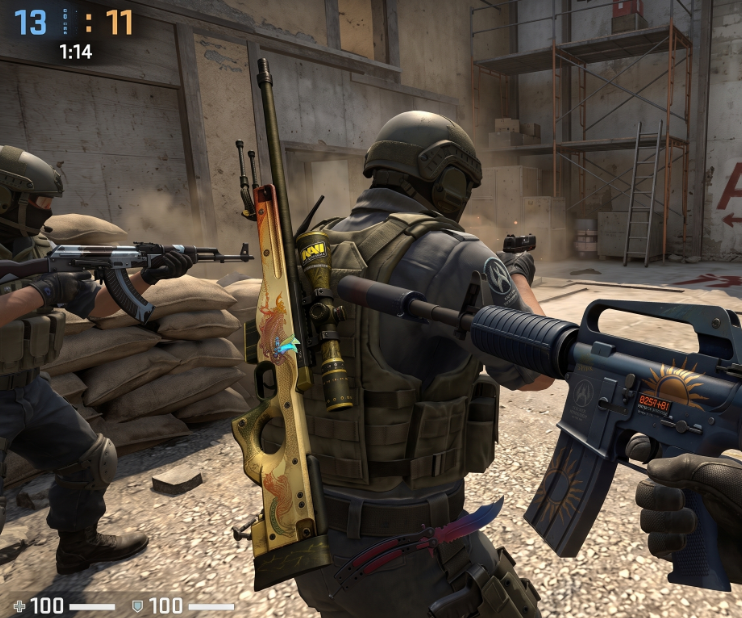
Skins can be available in both regular and StatTrak versions. This is a counter that displays your kill count. Most skins are available with StatTrak. Some players don’t need this feature, while others prefer these skins, especially if they frequently use the same weapon. The bottom line is that StatTrak skins are almost always more expensive than regular skins. How much more expensive depends on the popularity of the skin itself and how many skins are available for sale.
StatTrak items drop at roughly a 1-in-10 ratio compared to non-StatTrak variants during case openings. Because they are ten times rarer, StatTrak variants naturally push CS2 skin prices upwards. Furthermore, StatTrak items can only be used in trade-up contracts with other StatTrak items, creating a distinct, isolated market.
Applied Stickers and Their Impact on CS2 Skin Prices
Stickers aren’t so simple. Sometimes they increase a skin’s value, sometimes not so much. If you’re planning to buy CS2 skins with stickers, you should definitely look into the details. A sticker can increase the price of a skin if it is rare, collectible or simply looks good on a weapon. Some players value a clean design. Cheap stickers on weapons barely affect the price, especially if they were applied randomly, without any overall idea. It all comes down to how rare the sticker is and sometimes to a well put together combination.
When evaluating how stickers alter CS2 skin prices, traders look at the applied sticker value:
- Legacy Tournament Stickers: Applying discontinued stickers like Katowice 2014 Holos adds between 2% to 15%+ of the unapplied sticker’s value to the weapon.
- Sticker Placement: Stickers placed in prominent positions (such as on the wood of an AK-47 or the scope of an AWP) add more value than placement on hidden or scraped weapon parts.
Marketplace Fees and Seller Pricing Impact CS2 Skin Prices
A skin’s price isn’t just influenced by its characteristics and popularity. Different platforms have their own fees, so the same skin often sells for different prices depending on where it is listed. Furthermore, sellers themselves can set the price they deem appropriate (P2P sales).
Some want to sell their item as quickly as possible and set a price below market value. Others are willing to wait weeks or months to get more money. Because of this, you often see identical skins on the same page, but with noticeable price differences.
Fees play a massive structural role in determining listing figures:
- Official Community Market: Platforms like the Steam Community Market charge a combined 15% transaction fee, causing sellers to adjust prices higher to recoup costs.
- Third-Party Cashout Sites: External peer-to-peer (P2P) market sites feature lower seller fees (often 2%–5%), resulting in cash prices that are typically 25%–30% lower than Steam wallet prices.
Final Thoughts on Navigating CS2 Skin Prices
The CS2 skin’s price is not only based on the weapon model and name. The price is affected by factors such as wear, float value, pattern index, StatTrak, stickers, marketplace fees, and of course the seller’s asking price. This is why two skins that look the same can have very different prices. Therefore, before buying, it is best to pay attention not only to the general characteristics of skins, but also to less obvious features. Spend a few minutes to check the float value, pattern, or stickers to understand why a particular skin is more expensive than others, and make the right purchase.
Looking for active squadmates to jump into matches with and flex your new skins? Find dedicated teammates and streamline your server recruitment using the GameTree Discord LFG bot.