






Boost Your Game Decisions: Understanding In-Game Probabilities
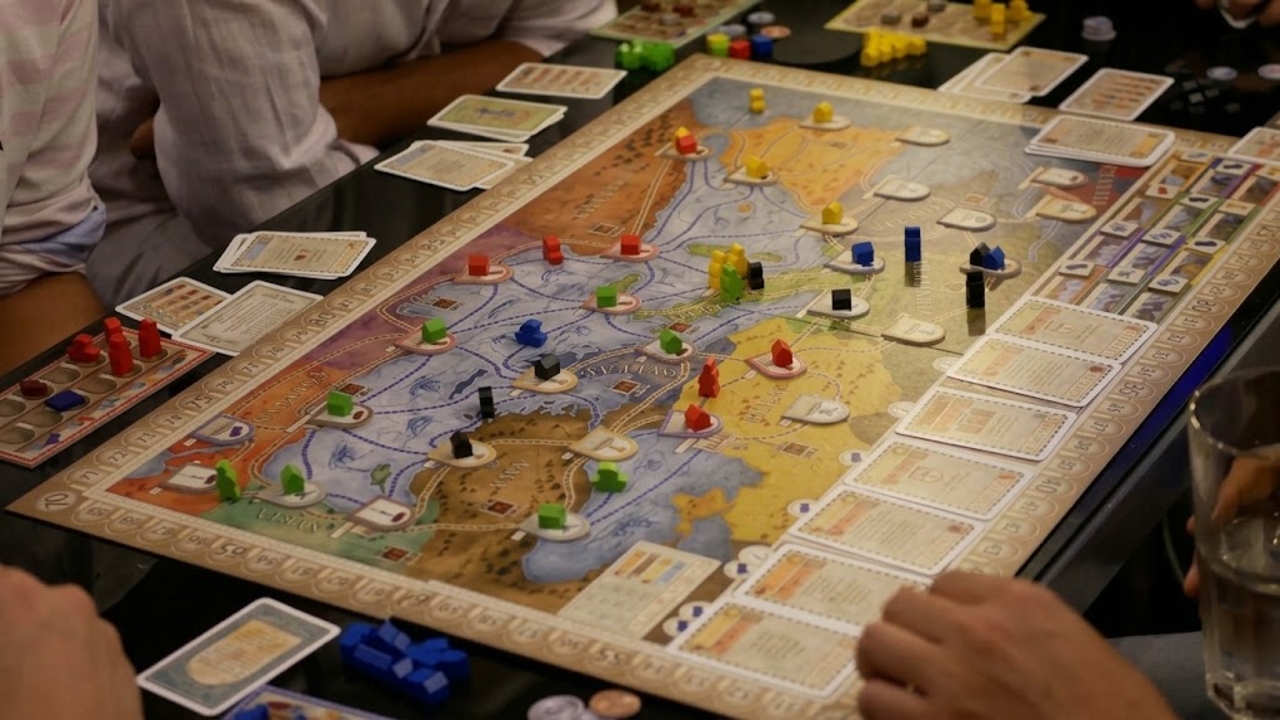
Strong game decisions come from estimating what could happen, how likely each outcome is and what it may cost. Probability gives you a practical way to compare options instead of relying on instinct alone. You don’t need advanced math, either. A few basic calculations, careful recordkeeping and an understanding of other players can improve choices across strategy games, tabletop games and competitive multiplayer titles.
Calculating Your Chances
Start with a simple ratio: divide the number of favorable outcomes by the total number of possible outcomes. If a game presents four equally likely rewards and only one restores your character’s health, the probability of receiving that reward is 1 divided by 4, or 25 percent. Percentages become more useful when you translate them into expected frequency. A move with a 25 percent success rate should work about once every four attempts over a large sample. It may succeed twice in a row or fail six times in a row because short sequences often vary. The underlying probability describes a long-term pattern, not a schedule.
Many games also display percentages that depend on accuracy, character attributes or environmental effects. Check whether those percentages apply to the entire action or only one stage. A move that first requires an 80 percent accuracy check and then a 50 percent effect check has a combined success probability of 40 percent:
0.80 × 0.50 = 0.40
A helpful guide to game probability concepts explains how players can use these calculations during play. For quick decisions, round figures to manageable numbers. Treat 33 percent as roughly one in three and 67 percent as roughly two in three, then focus your attention on the consequences of each result.
Risk vs Reward in Gameplay
Probability alone can’t tell you which move to choose. You also need to compare the value of success with the cost of failure. A low-probability action may be reasonable when you’re far behind and a safe move offers little chance of recovery. The same action may be wasteful when you already have a comfortable lead. Suppose one option has a 70 percent chance to earn 10 points, while another has a 30 percent chance to earn 30 points. Their expected values are seven points and nine points respectively. The second option has a higher mathematical average, but it also produces no reward 70 percent of the time. Your current score, remaining turns and tolerance for variance should shape the choice.
Designers use risk-reward decisions to create tension between steady progress and uncertain gains. Players can apply the same framework by asking three questions: What do I gain, what do I lose and how many future opportunities remain? When probability appears in unfamiliar notation, a guide to betting odds formats can help you translate fractional, decimal and American odds into comparable implied probabilities. Once every option uses the same format, the trade-offs become easier to see.
Good risk and reward strategy also accounts for position. Protect valuable resources when ahead. Accept more variance when behind, especially near the end of a match when conservative play no longer offers enough time to catch up.
Beyond Simple Coin Flips
Real games rarely offer two equally likely outcomes. Cards leave the deck, dice create several possible totals and player choices change what happens next. These systems require conditional probability, which updates your estimate when new information appears. Imagine a deck-building game with 20 cards remaining, including five useful cards. Your chance of drawing one useful card next is 5 divided by 20, or 25 percent. If you draw an unhelpful card and don’t replace it, the next chance becomes 5 divided by 19, or about 26.3 percent. Tracking what has already appeared produces a better estimate than treating every draw as independent.
Dice show another common complication. Two six-sided dice can produce totals from 2 to 12, but those totals aren’t equally likely. There is only one combination that produces 2, while six combinations produce 7. A clear overview of dice probability calculations shows why counting combinations matters. Some games use hidden information, so an exact calculation won’t be possible. Build a range instead. If an opponent could hold between two and four strong options, estimate the best case, worst case and most likely case. Your move should remain acceptable across most of that range.
Watch for dependence as well. If one event changes the chance of another, don’t multiply them as if they were unrelated. Drawing cards without replacement changes later draws, while repeated rolls of a fair die stay independent.
Using Data for Better Plays
Record your decisions if you want to find patterns that memory tends to hide. Players often remember dramatic successes and frustrating failures while overlooking ordinary outcomes. A small spreadsheet or notebook gives you a more reliable account. For each important choice, record the game state, option selected, estimated success chance, result and reason for choosing it. After 20 to 30 similar situations, review the entries. Look for repeated errors such as overestimating rare outcomes, protecting resources for too long or taking unnecessary risks while ahead.
Keep prediction quality separate from outcome quality. A choice with an 80 percent chance can fail, yet the decision may still have been sound. A reckless move can succeed through luck without becoming a good strategy. Judge your estimate and reasoning first, then use the result as one new data point. Game replays can add context that a spreadsheet misses. Pause before a key turn and write down what you believe each player can do. After the match, compare that prediction with what happened. You may discover that your probability estimate was accurate but your reward valuation was wrong, or that you ignored an option available to another player.
Use sample size carefully. Three failures don’t prove that a stated 60 percent chance is inaccurate. Larger samples reduce random variation, though patches, balance changes and different opponents can make old results less relevant. Reset or label your records whenever the game’s rules change in a meaningful way.
Mastering Game Theory Basics
Probability examines uncertain outcomes, while game theory examines choices made by people whose goals affect one another. In competitive play, your best move often depends on what another player expects you to do. Consider a simple choice between an aggressive push and a defensive setup. If you always push, observant opponents will prepare a counter. If you always defend, they can claim space with little resistance. Mixing your choices makes your play harder to predict. The ideal mix depends on the rewards and penalties attached to each matchup.
You can practice this idea without solving complex equations. Identify your most common action in a repeated situation, then check whether skilled opponents can exploit it. Add a second credible option and track how often each one works. Both options need to serve a real purpose. Randomly choosing between one strong move and one clearly weak move only lowers your performance. Game theory also helps in cooperative settings. Team members should consider how their actions affect shared resources, turn order and other players’ options. A move with modest personal value may create a much stronger follow-up for a teammate. Clear communication changes the probability of coordination because everyone works from the same expectations.
Before committing to a key play, pause and estimate three things: the chance of success, the value of each outcome and the likely response from other players. That short routine turns probability from background information into a repeatable part of your game plan.
Before committing to a key play, pause and estimate three things: the chance of success, the value of each outcome and the likely response from other players. That short routine turns probability from background information into a repeatable part of your game plan. If you want to put these strategies into practice with reliable teammates who share your competitive mindset, connect with like-minded players on GameTree.