






How Artificial Intelligence Is Used in the Gambling Industry
Artificial intelligence is changing many online industries. Gambling is one of them. Modern gambling platforms handle huge amounts of data every day. They process payments, manage games, answer questions, and watch for unusual activity. AI can help with many of these jobs. It can process data much faster than a human team.
It can also spot patterns that may be hard for people to notice. However, AI is not only about making platforms faster. It also raises questions about privacy and how companies use customer data. This is most clear when AI is used to personalize online services.
Finding Unusual Activity
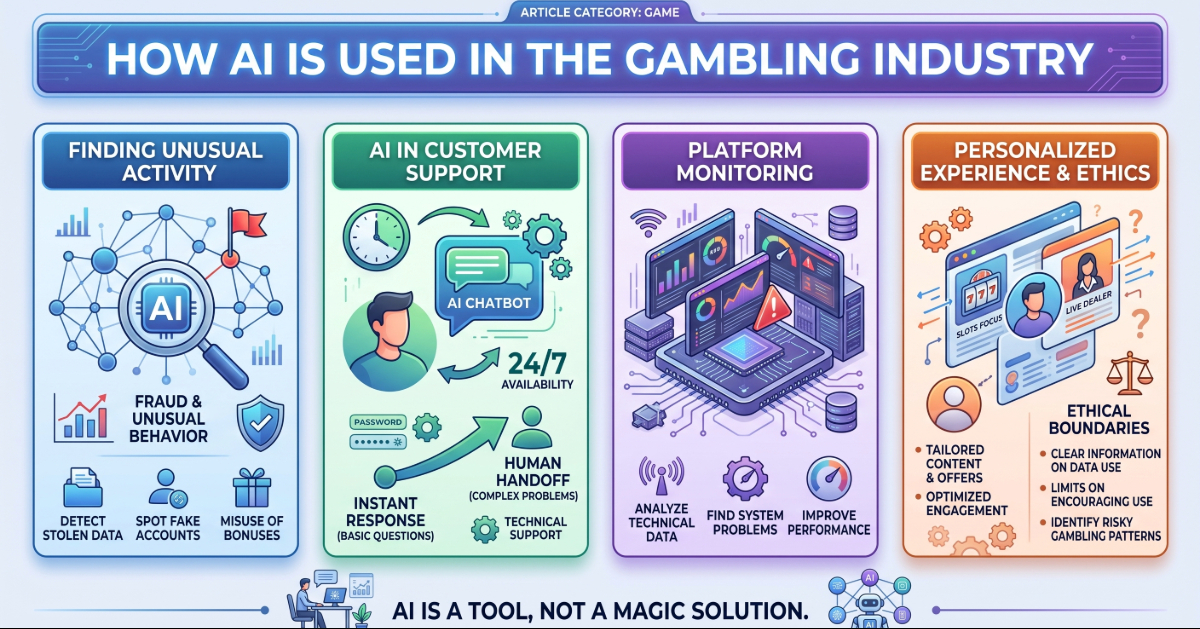
Fraud is a serious problem for online businesses. Gambling platforms are no exception. They may face stolen payment details, fake accounts, or attempts to misuse bonuses and other platform features. AI systems can help detect unusual activity. They can review large amounts of data and look for patterns that seem different from normal behavior.
For example, a system may notice several accounts using the same device or payment details. It may also detect strange login patterns. Such activity does not always mean fraud. There can be a simple explanation. For this reason, AI often acts as an early warning system. It can flag an account or transaction for further review. A human security team can then check what happened.
This approach can save time. Instead of checking every action by hand, staff can focus on cases that need more attention. You can find the same thorough approach on the Felix Gaming slots platform.
AI in Customer Support
Customer support is another area where AI has become common. Many gambling websites receive similar questions every day. People may need help with passwords, account settings, payments, or technical problems. An AI chatbot can answer some basic questions within seconds. It can work at any time of day and deal with many conversations at once.
This does not mean human support is no longer needed. Some problems are too complex for a chatbot. A good support system can identify these cases and send them to a real person. AI can also help support teams behind the scenes. It can sort messages by topic or find useful information for an employee. This can make the support process faster without removing the human part of it.
Watching How a Platform Works
A large gambling platform can include hundreds or even thousands of games. It may also have payment systems, mobile apps, websites, databases, and tools from outside companies. Keeping all these systems running is a major technical job.
AI can analyze platform data and help technical teams find problems. Imagine that one game suddenly takes much longer to load than usual. An automated system may detect the change before many users report it.
AI can also study server activity and error reports. This gives developers a clearer picture of how the platform performs. In this role, AI is less visible. A person using the website may never know it is there. Yet it can be working in the background all the time.
Personalizing the Interface
Personalization is one of the most interesting uses of AI. Many digital services change what they show based on previous activity. Streaming platforms, online stores, and social networks already use this technology. Gambling platforms can use similar systems. AI may analyze which sections of a site a person visits or which features they use. The interface can then change based on this information.
For example, the system might change the order of menu items or show certain types of content more often. The goal is usually to make the website feel more relevant to each person. Technically, this can be very advanced. An AI model can process thousands of small signals and make changes in real time. But this technology also creates important questions.
When Personalization Goes Too Far
Personalization may be useful, but gambling is different from shopping for books or choosing a movie. If a platform knows a lot about a person’s behavior, it may also learn when that person is most likely to stay active. This creates an ethical issue. A system designed to increase engagement could encourage longer or more frequent use.
Privacy is another concern. Personalization needs data. Users may not always understand how much information is collected or how algorithms use it. This is why transparency matters. People should have clear information about data collection and automated systems. Companies also need limits on how personal data can be used.
AI can also play a more protective role. Some systems can look for changes in behavior that may suggest risky gambling patterns. These signals can then support responsible gambling tools or trigger additional checks.
AI Is a Tool, Not a Magic Solution
Artificial intelligence is becoming part of the technical structure behind online gambling. It can detect unusual activity, support customer service, monitor software, and personalize digital interfaces.
Still, AI does not make perfect decisions. Algorithms can make mistakes. They can misunderstand unusual behavior or produce poor results when the data behind them is limited. Human oversight remains important, especially when an automated decision affects a real person.
The most interesting part of AI in gambling may not be what users can see. Much of the technology works quietly in the background. It processes data, searches for patterns, and helps complex platforms operate. As AI becomes more powerful, the main question will not simply be what this technology can do. It will also be how companies choose to use it and what limits they put in place.
To see how intelligent automation and matchmaking tools coordinate gaming communities, check out the GameTree Discord LFG Bot: https://gametree.me/discord-lfg-bot/
To see the bot in action, check out Meet the Discord Bot That Actually Works. This walkthrough illustrates how the GameTree Discord LFG bot organizes game sessions and connects players.