






Learn the Callouts and Your Five Stack Improves Overnight
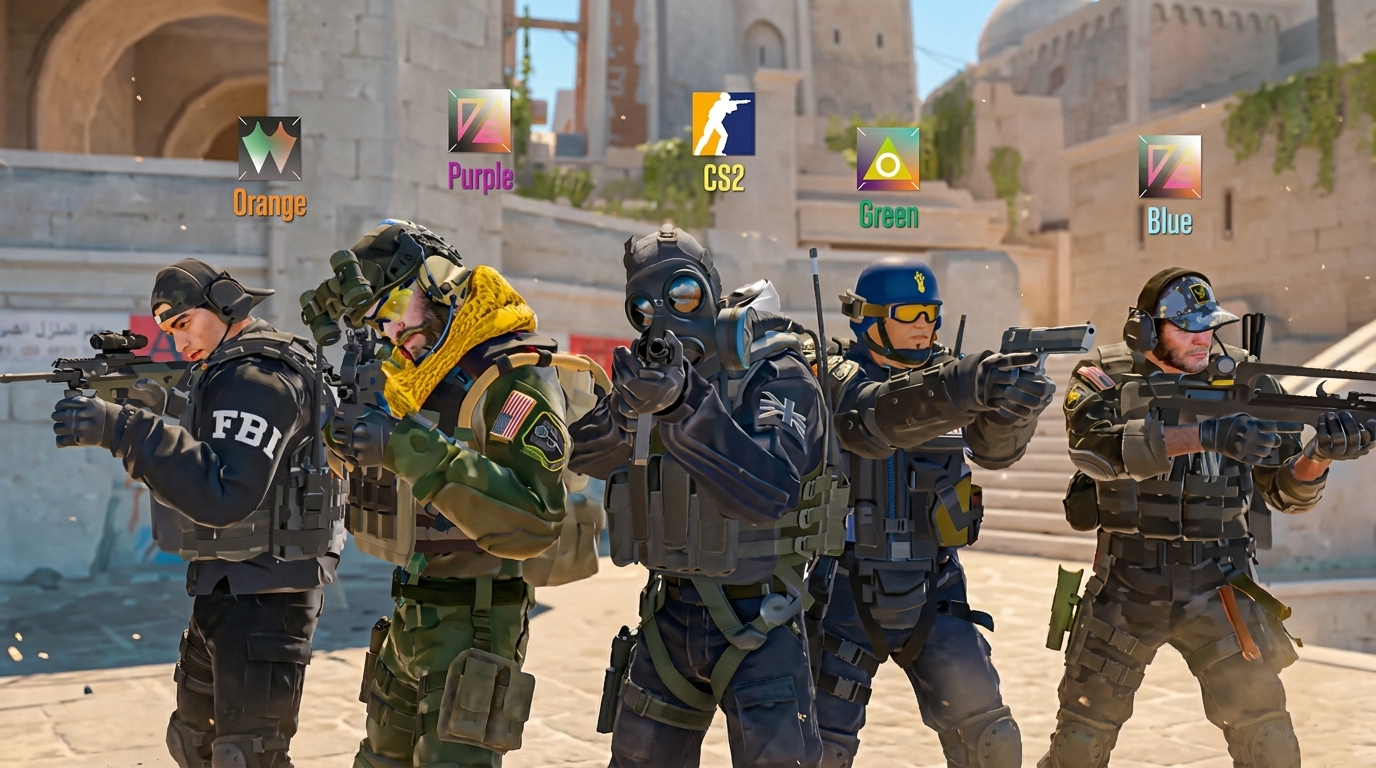
Most teams that fall apart in Counter-Strike do not lose fights, they lose information. Somebody sees three players rotating, says something vague, and by the time the rest of the team understands it the round is already gone.
Aim gets all the attention because it is the visible skill. Communication is the one that actually separates a group of five individuals from a team, and it is far easier to fix.
The whole thing rests on a shared vocabulary, which is what callouts are.
Why Precision Beats Speed in Comms
Saying an enemy is somewhere on the left tells your team almost nothing. Saying they are in a specific named position tells four people exactly where to look, how long they have and which utility is worth throwing.
Counter-Strike has developed a standardised name for essentially every meaningful position on every map, built up over two decades of competitive play. It exists precisely so that this information can travel in one word.
A team that uses those names properly will beat an identically skilled team that does not. That is not a small edge, and it costs nothing but memorisation.
How Many You Actually Need to Know
The full picture is larger than most players assume. Across the seven active duty maps there are well over five hundred named callouts, which sounds like an impossible amount of homework.
It is much less daunting broken down by map. A reference like the CS2 map database lays out each of the seven active duty maps with its full callout list, highlights the six or seven names that carry most of the traffic, and pairs them with utility lineups and separate attacking and defending notes for that map.
Learning the key names for one map is an evening’s work. Knowing the six or seven that matter on Mirage covers the overwhelming majority of the calls anyone will make there.
It also tracks how the pool has moved, which matters when a map you never learned suddenly enters rotation and everyone is calling positions by guesswork again.
Start With One Map, Not All Seven
The sensible approach for a new group is to pick a single map and get genuinely good on it before touching anything else. Mirage or Inferno are the usual choices because everybody has some exposure to them already.
Play it repeatedly with the same four people. Familiarity with the map and familiarity with each other compound, and a team that knows one map deeply will beat a team that half-knows five.
Once the callouts are automatic on that map, the second one takes far less time. The habit transfers even though the names do not.
The Map Pool Keeps Moving
Valve rotates the competitive map pool periodically, adding and retiring maps and reworking others substantially enough to change how they play. The official Counter-Strike updates are where those changes get announced, and they arrive without much warning.
A rework can invalidate lineups and shift which areas matter, so a team that learned a map two years ago may be working from an outdated mental model. Worth checking after any significant patch.
Reserve maps come back into rotation too, which is a reasonable argument for having at least passing familiarity with the ones outside the current seven.
Comms Discipline Is a Group Habit
Correct names only help if everyone uses them consistently, which is a team agreement rather than an individual skill. One player improvising their own vocabulary undoes the benefit for everybody.
Keep calls short and factual. Position, number, and whether they are still there, delivered in about two seconds, is worth more than a detailed account of what just happened to you.
Silence after dying is the other common failure. The person who just lost a fight usually has the most useful information in the round.
Finding Four People Who Will Bother
None of this works in solo queue, where you are getting new teammates every match and nobody is invested enough to learn anything together. Consistency is the prerequisite.
This is the actual reason a proper CS2 team finder is worth using rather than pulling names out of a chat channel, since matching on playstyle, schedule and how seriously people want to take it produces a group that still exists in a month.
Agree early on how structured you want to be. A stack where three people want to run strats and two want to mess about will not last, and that is worth finding out before wasting anyone’s evenings.
Where This Gets You
Callouts are the cheapest improvement available in Counter-Strike. No mechanical practice, no reflex training, just a shared set of words that everyone agrees to use.
Learn one map properly with a group that plays together regularly, and the difference shows up within a few sessions. Most teams skip this and wonder why their individual skill is not translating.
The information was always there. Teams that win are simply the ones who can pass it around fast enough to act on it.